 Approfondimento
Spin the wheel of names: when (and when not) to pick a wheel
In questa pagina
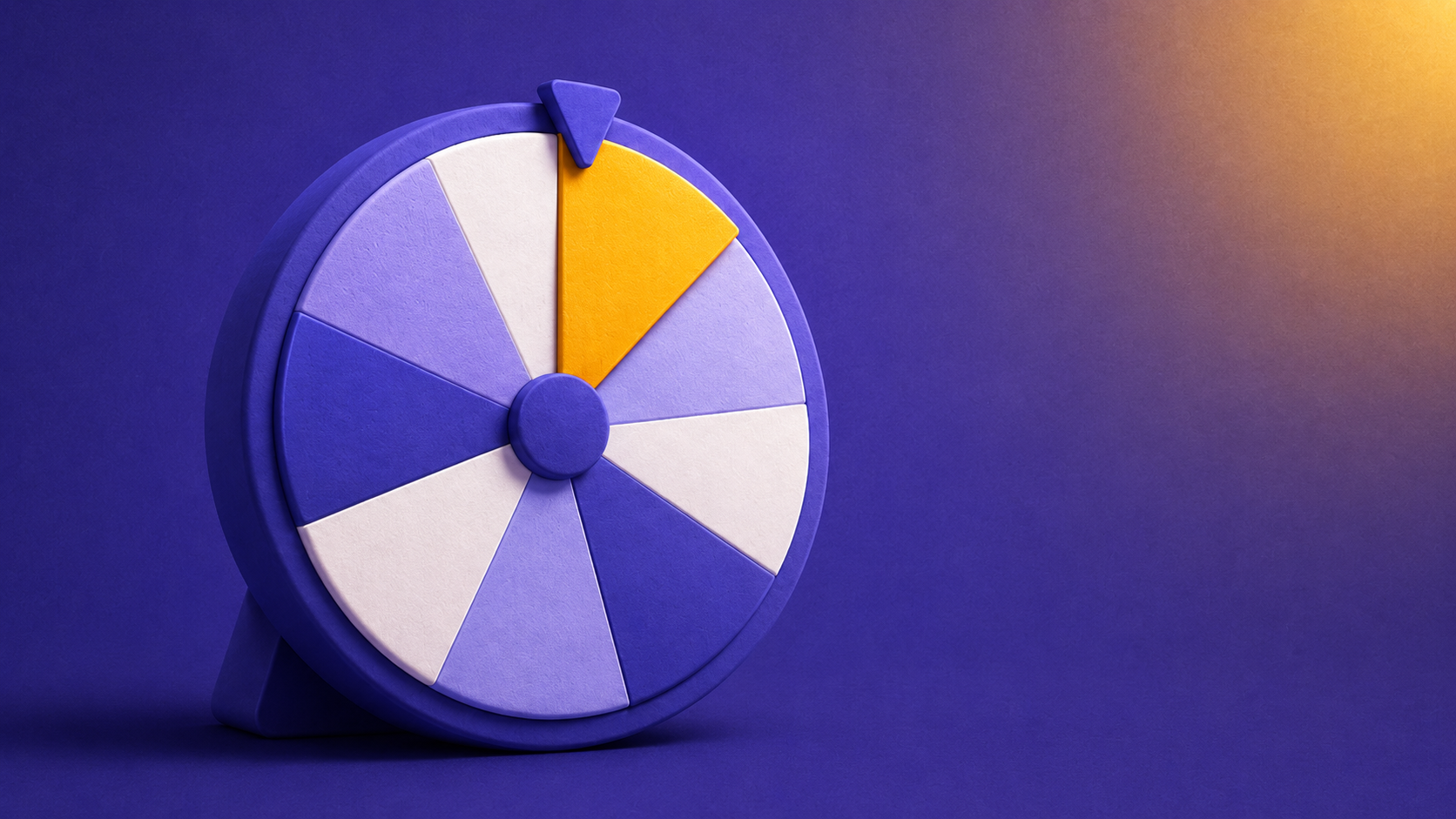
A wheel picker and a name picker run the exact same algorithm under the hood: a uniform random pick from a list. The difference is theatre. A flat draw lands an answer in 200 ms; a wheel takes three to five seconds to spin, decelerate, and settle on the same answer. That gap — five seconds of focused attention — is the entire reason to pick the wheel over the list. This guide is about when those five seconds pay for themselves, and when they're a tax.
What the wheel adds that a list doesn't
The wheel adds shared attention. When a teacher hits draw on a flat name picker, half the class is still on their phones when the result appears. When the wheel starts spinning, everyone looks at the screen — the same way everyone looks when a coin is flipped in the air. It's not that the wheel is fairer; it's that the wheel makes fairness visible. The spin is the receipt.
The wheel also adds shared waiting. Five seconds of group anticipation is a small ritual. For a classroom, a birthday, a stream chat, an icebreaker — that ritual is what people remember about the moment, not the name that came out.
When the wheel is the right tool
- Audience moments. Streamer giveaways, live raffles, anything with viewers watching a screen together. The spin is the show.
- Classroom rituals. Picking a student to read aloud, picking the next presenter, choosing a clean-up team. The wheel makes the call feel impersonal and decided.
- Birthday party games. "Who opens the next gift?" lands better with a spin than with a list of names.
- Mid-meeting energy reset. A team using a wheel to decide who demos next gets a small jolt of attention that a flat draw doesn't produce.
When the wheel is the wrong tool
- More than ~30 participants. The slices become unreadable, the names blur into colour bands, the moment is lost. Use a flat draw or split into rounds.
- Repeated draws in a row. Five seconds × twenty draws = 100 seconds of waiting for a result that should be instant. Switch to the list view.
- Sensitive picks. Choosing who gets laid off, who pays the bill for an awkward meal, who gets to keep the only good chair — anything where the feeling of the pick matters more than the pick itself. The wheel turns serious moments into game-show moments.
- Anything you'll need to audit. A wheel picker doesn't produce a verifiable receipt. If the draw needs to stand up to scrutiny later, use a verified random draw instead.
How to make a wheel feel intentional
A few small things separate a wheel-of-names moment that lands from one that feels gimmicky:
- Match the wheel size to the group. Six to twelve names is the sweet spot; the slices read clearly, the spin lasts long enough to build tension.
- Read the names out loud before spinning. Three seconds of "Okay — Alex, Sam, Jordan, Lee, Casey, Riley — here we go" sets the stakes.
- Don't redraw. The wheel only works if the spin is the answer. Re-spinning until you get the "right" person breaks the ritual and trains everyone to expect it.
- Keep the deceleration consistent. A predictable spin curve (5 full rotations, ~3.5 s, smooth ease-out) feels deliberate. Random jitter feels broken.
What's actually random about it
The wheel picker on Plouf-Plouf uses the same crypto.getRandomValues primitive as the flat draw — cryptographically random, rejection-sampled to avoid modulo bias. The winner is decided the instant you click. The spin animation just animates to that decided position. It's theatre on top of a fair pick, not theatre instead of one.
A short rule
Use the wheel when you want the moment. Use the list when you want the answer.
If you can't say which one you want, you want the list.
Articoli correlati
 Approfondimento
Random name picker online: how it works and what to look for
A practical guide to picking names randomly online — what makes a draw actually fair, what to avoid, and which features matter for real-world use.
5 min di lettura Caso d'uso
A random picker for teachers: 7 ways to use one in class
Practical ways teachers use random pickers in real classrooms — from cold-call replacements to team formation, with privacy notes for school-friendly tools.
6 min di lettura